
Explore this article
01When Sustainability Becomes an Economic Issue02The Other Side of Risk Is Opportunity03Productivity Is Becoming a Sustainability Strategy04Sustainability Is Moving Into the Product05When the Issue Changes, the Role Changes06From Sustainability Metrics to Business Value07The Question Every Leader Should AskFor years, the business case for sustainability was largely built around what companies could prevent. Lower emissions meant lower regulatory exposure. Better environmental performance protected reputation and licence to operate. Using less energy and fewer resources reduced cost. Better reporting created transparency and helped companies respond to investors, customers and regulators. All of this mattered and still does. But it framed sustainability primarily as a way of reducing harm, limiting risk and protecting existing value.
That business case is now becoming much larger. Energy has become a strategic input to growth. Resource availability has become a question of resilience and sovereignty. Circularity can reduce dependence on virgin materials and create entirely new revenue models. Technologies that reduce energy, water and material intensity can raise productivity at the same time. Customers are creating markets for lower-carbon products, while geopolitical tensions are forcing companies to rethink where and how they source critical inputs. Sustainability is moving from the language of responsibility into the economics of competitiveness.
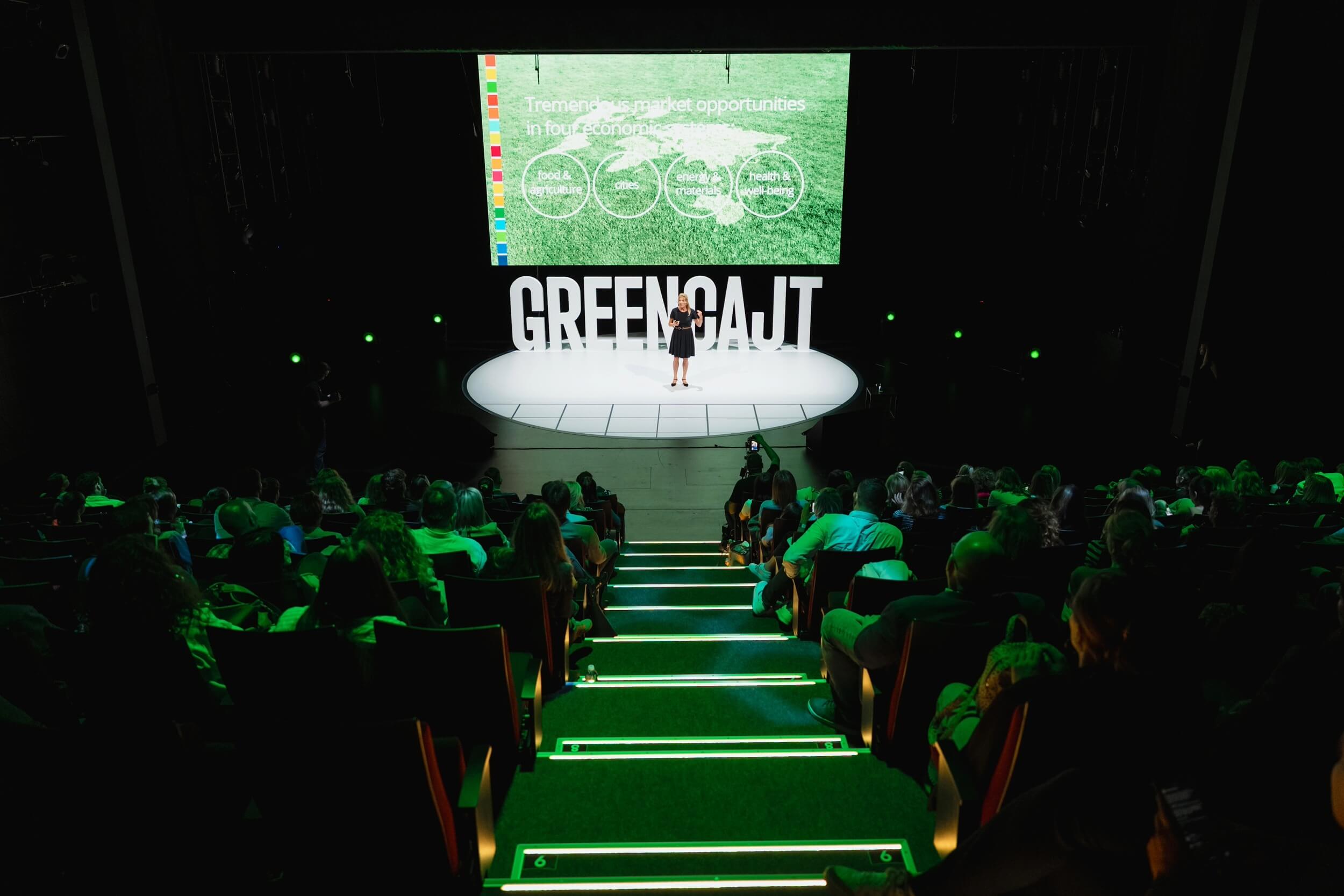
This became particularly clear to me recently at the annual Sustainability Congress of Sustainability Leaders, A World 50 Group Community in Amsterdam. During a workshop with sustainability executives, one participant kept returning to the same simple question: and so? A company reduces energy consumption — and so what does that mean for margins, exposure and productivity? It redesigns its material flows — and so what does that mean for supply security and working capital? It reduces carbon in a product — and so does that create customer preference, open a new market or protect future revenues? The point was not to diminish sustainability impact, but to connect it to the decisions by which companies allocate capital, build competitive advantage and create value.
That connection matters more now because the economic context has changed. Sustainability used to be discussed mainly as an externality that business had to manage. Increasingly, it determines the quality of the business itself. The companies that understand this shift will not simply become more sustainable. They will become better positioned to innovate, operate, compete and grow.
Risk, reporting, regulatory exposure
Productivity, resilience, growth
When Sustainability Becomes an Economic Issue
The organisational position of sustainability has not yet caught up with this reality. Deloitte’s 2026 Chief Sustainability Officer Survey, based on 106 CSOs, found that regulatory compliance and disclosure remain among their dominant priorities. Only 18% of respondents sit on the executive or C-suite team and only 11% report directly to the CEO. Deloitte also found that the share of CSOs saying senior leaders “own” or “adopt” sustainability goals had fallen from 56% in 2025 to 39% in 2026. Deloitte’s 2026 Chief Sustainability Officer Survey
There is nothing wrong with strong reporting, credible disclosure or compliance. They are essential. The problem arises when they become the centre of gravity of the function while the larger business opportunities remain elsewhere. Deloitte’s own conclusion is telling: sustainability functions need to move from protecting enterprise value towards creating it, connecting more directly with the CFO on capital allocation, the COO on operations and commercial leaders on customer value and growth.
The distinction between protection and creation is important. Protecting value asks how climate, regulation or resource scarcity could hurt the business. Creating value asks how those same forces could make the company more productive, more resilient or more relevant to customers. The first produces a risk register. The second can produce a strategy.
McKinsey’s analysis of 2,269 public companies gives weight to that distinction. Looking at the period from 2017 to 2021, it found that companies outperforming their peers simultaneously on growth, profitability and ESG improvement generated annual total shareholder returns around two percentage points higher than companies that outperformed on financial performance alone, and seven points higher than the remainder of the dataset. McKinsey is careful about the limitations: the study covers a relatively short period, uses ESG ratings that themselves have imperfections, and establishes association rather than proving sustainability caused those returns. But the more important finding is difficult to dismiss: sustainability performance created no substitute for weak economics. Companies had to outperform on growth and profitability as well. McKinsey, “The triple play: Growth, profit, and sustainability”
That is precisely where the sustainability debate should mature. Sustainability is not an alternative to good business. Its value emerges when it strengthens good business.
“The first produces a risk register. The second can produce a strategy.”
The Other Side of Risk Is Opportunity
Many of the forces currently increasing sustainability risk are simultaneously creating economic opportunity. Energy volatility makes efficiency and self-generation more valuable. Resource scarcity increases the value of recovery, substitution and circular design. Carbon constraints create markets for lower-carbon materials and technologies. Water stress changes the economics of industrial processes. Supply-chain disruption makes localisation, traceability and alternative sourcing more important. The same pressure can therefore appear on one company’s risk register and another company’s growth plan.
This changes how leaders should look at sustainability. Reducing energy intensity, for example, is not simply an environmental achievement when energy is expensive or constrained. It improves the productivity of an input that every company needs. Reducing material intensity matters for the same reason. A manufacturer able to create the same output with fewer scarce materials has improved both its environmental footprint and its economic resilience. A company that can recover materials from products already in circulation creates a source of supply that competitors dependent entirely on virgin extraction do not have.
This is also where sustainability increasingly intersects with sovereignty. In my previous Business for Good article, I argued that companies must understand which dependencies can stop them from growing. That logic applies directly here. The transition towards more sustainable energy, materials and production systems is not simply about impact; it can give companies greater control over the inputs on which future growth depends.
The traditional assumption that efficiency means buying every input from the cheapest possible source is being tested by a more volatile world. A lower nominal price creates little value if supply is unreliable, politically exposed or structurally constrained. The new business case therefore includes something companies once struggled to price: optionality. The ability to switch sources, recover materials, generate energy, redesign products or operate with fewer constrained inputs has economic value because it gives the business more freedom to act.
Productivity Is Becoming a Sustainability Strategy
One of the least appreciated changes is the convergence between sustainability and productivity. The first decades of corporate sustainability often focused on reducing a company’s footprint while leaving the underlying operating model largely intact. Technology is now making something more ambitious possible: using energy, materials, equipment and data far more intelligently.
AI, digital twins, industrial automation, sensors and advanced analytics can identify waste that previously remained invisible. Equipment can be maintained before failure rather than replaced after it. Energy consumption can be matched much more closely to production. Material flows can be traced, recovered and redirected. Buildings, factories and data centres can optimise loads in real time. None of these technologies is inherently “sustainable”; their value lies in what companies choose to optimise with them.
Schneider Electric illustrates how large this market has become. The company sits at the intersection of electrification, automation, digitalisation and energy management, enabling customers to use electricity and industrial assets more intelligently. In 2025, Schneider reported €40 billion in revenues, organic growth of 9% and an adjusted EBITA margin of 18.7%. Sustainability is therefore not an adjunct to its business proposition. The demand for more efficient, electrified and digitally managed operations is a significant part of the market in which the company competes. Schneider Electric 2025 key figures
Siemens shows the same convergence from another angle. Its industrial technologies combine automation, software, electrification and digital infrastructure, and the company calculates that products and solutions sold through fiscal 2025 will enable customers to avoid a cumulative 694 million tonnes of CO₂-equivalent emissions over their lifetimes. The methodology, like all avoided-emissions calculations, depends on assumptions about the alternative technology that would otherwise have been used. What matters strategically is the direction: solutions that make industry more productive increasingly also make it less energy- and carbon-intensive. Siemens sustainability performance 2025
The business opportunity therefore moves well beyond “using less.” The more interesting question is how much economic output a company can create from every unit of energy, material, water, capital and labour it deploys. Seen through that lens, sustainability becomes a productivity agenda, and productivity has always belonged at the heart of strategy.
“Sustainability becomes a productivity agenda, and productivity has always belonged at the heart of strategy.”
Sustainability Is Moving Into the Product
The business case becomes even stronger when sustainability moves from internal operations into what customers actually buy. For a long time, many companies treated sustainability as a programme surrounding the product. Increasingly, it is changing the product itself: its materials, energy use, durability, service model, carbon intensity and economics over its lifetime.
Holcim provides a tangible example. The company has been developing lower-carbon construction materials while expanding its circular use of construction and demolition waste. In the first nine months of 2026, its ECOPact lower-carbon concrete represented 33% of ready-mix net sales, while ECOPlanet represented 43% of cement net sales. Over the same period, Holcim increased its recycling of construction and demolition materials by one-third to 7.4 million tonnes. The significance is not that a cement company has a sustainability programme. It is that lower-carbon and circular offerings are becoming meaningful parts of what it sells. Holcim Q3 2026 results
Philips provides another perspective. In 2025, the health-technology company reported that 27.9% of its total revenues qualified as circular revenues, up from 24.4% a year earlier. The measure includes business models and products involving circular design, services during the use phase, end-of-use management and circular delivery or financing models. Circularity in this case is not merely about recycling discarded equipment; it increasingly influences how equipment is designed, maintained, upgraded, financed and recovered throughout its economic life. Philips Annual Report 2025
These examples point to a larger shift. Sustainability becomes strategically powerful when it influences the proposition customers pay for. A building material with a different carbon profile, a machine that consumes less energy, medical equipment designed for longer use, or software that helps a factory reduce resource consumption can all solve economic problems as well as environmental ones. The sustainability case then stops depending primarily on a customer being willing to “pay for green.” It begins to depend on creating a product that is simply better suited to the economics of the future.
This is an important distinction because sustainable products will not win merely by being sustainable. They still need performance, quality, availability and a convincing price. A green premium can disappear. Regulation can change. Technologies can disappoint. Customers can choose differently. The strongest opportunity therefore lies where sustainability improves the fundamental customer proposition rather than sitting beside it.
When the Issue Changes, the Role Changes
This economic shift also changes the role of sustainability leadership. We have seen comparable transitions before. Technology once sat largely in a specialist function responsible for systems, infrastructure and cost. As digital technology moved into products, customer relationships, operations, innovation and business models, the role of technology leadership changed with it.
McKinsey’s 2026 Global Tech Agenda, based on responses from 632 technology and business leaders, found that almost two-thirds of top-performing companies say their technology leaders are very involved in shaping enterprise strategy, compared with 52% of other organisations. Its conclusion is that leading CIOs are moving from technology managers towards strategy architects because technology itself has moved from a support capability into a source of value creation. McKinsey Global Tech Agenda 2026
Human resources made a similar journey. For decades, HR was frequently regarded as an administrative function centred on payroll, benefits and personnel processes. As talent, leadership, culture and organisational capability became more clearly connected with business performance, the remit changed. Harvard Business Review described this evolution more than a decade ago, observing that CHROs were increasingly reporting directly to CEOs, advising them and appearing before boards rather than operating mainly as a back-office function. Harvard Business Review on the changing CHRO role
Sustainability is reaching a comparable point. If energy, resources, climate, circularity, supply chains and changing customer markets affect growth and competitiveness, sustainability leadership cannot remain primarily a reporting and compliance function. The CSO has to be able to translate environmental and societal shifts into capital allocation, innovation, operations and commercial strategy. Yet the larger goal should not be to build a more powerful sustainability silo. It should be to make the rest of the company better at sustainability.
The CFO needs to understand where resource and climate shifts affect returns on capital. The COO needs to see where energy and material productivity can improve operations. Procurement needs to understand strategic resource dependency. Product and R&D teams need to know which sustainability problems can become innovation opportunities. Commercial teams need to know where customer economics are changing. The CEO and Board need to understand which of these forces alter the company’s long-term competitive position. When this happens, the CSO is no longer the person to whom everyone delegates sustainability. The role becomes one of connecting, challenging and accelerating decisions across the enterprise.
From Sustainability Metrics to Business Value
This also requires a change in language. Sustainability has developed sophisticated ways to measure emissions, water, waste, biodiversity, targets and disclosure. Those metrics remain important, but they are not the end of the conversation. Business leaders also need to know what those metrics mean economically.
A tonne of carbon can be a regulatory exposure, an energy inefficiency or an innovation opportunity. A tonne of waste can be a disposal cost or a future material source. Water consumption can be an environmental metric or a production constraint. A supply-chain footprint can reveal an impact or a dependency. The metric does not tell management what to do; strategy starts when the company understands what the metric means for its ability to compete.
This is why I keep returning to the question “and so?” It is not meant cynically. It is a discipline. If emissions fall, what has improved in the economics of the company? If a material becomes circular, what dependency has been reduced or what new value has been retained? If biodiversity is essential to a supply chain, what is the financial exposure and what should the business redesign? If a sustainability initiative cannot yet be translated into a direct financial return, does it protect future market access, reduce a strategic risk or preserve an asset on which the company depends?
Not every sustainability intervention will produce an immediate return, just as not every investment in cybersecurity, research, talent or resilience does. The purpose of the exercise is not to force every impact into a simplistic quarterly ROI calculation. It is to make the economic consequences visible enough that management can make better choices about investment, timing and trade-offs.
That is also why reporting, however necessary, cannot become the strategy. Reporting describes performance against a framework. Strategy decides where the company will compete, which capabilities it will build, what it will invest in and how it will create future value. Sustainability becomes transformative when it enters those decisions.
The Question Every Leader Should Ask
The question for CEOs and Boards is therefore no longer simply whether the company is making sufficient progress on sustainability targets. They need to understand where sustainability is changing the economics of the business itself. Which energy, resource and environmental constraints could limit growth? Where can productivity improve through lower energy and material intensity? Which dependencies could be redesigned? Which new markets are emerging? Which products will become less competitive, and which entirely new propositions can be built? Where is the company still treating a strategic opportunity as a reporting obligation?
Those questions lead to a very different conversation. They turn sustainability from a specialist vocabulary into a lens on the business model. They also make the choices harder, because genuine strategy requires deciding where sustainability creates material value and where it does not. Companies should not pursue every initiative simply because it carries a sustainability label. Capital must still be allocated with discipline, technologies must work, customers must buy and business models must perform.
The companies that move furthest will therefore be those that stop treating sustainability and business value as parallel agendas. They will use sustainability to make supply chains more resilient, operations more productive, products more relevant, resources more secure and innovation more valuable. They will integrate it into investment decisions early rather than asking a sustainability team to assess those decisions after they have already been made.
Eventually, that may be the clearest sign of success: we will need to talk less about “sustainable business” because the principles have become part of what we simply recognise as good business. Technology followed that path. People strategy followed it. Sustainability is now moving there too.
The business case has changed. The opportunity is to change the business with it.
Frequently Asked Questions
How has the business case for sustainability changed?
Where do you see the greatest commercial opportunities in sustainability today?
How should CEOs and boards integrate sustainability into business strategy?
What should chief sustainability officers prioritize beyond compliance and reporting?
Sources & Endnotes
Chicago-style endnotes and verified links are pending editorial source verification. References in the original article remain in the text above; they must be converted to numbered notes before publication.
Primary sources mentioned include Deloitte, McKinsey, Schneider Electric, Siemens, Holcim, Philips, and Harvard Business Review. No external source verification is claimed in this concept.
Marga Hoek, Global Business Thinker, Board Member, Author and Speaker